
Permanent, Natural-Looking Solution for Missing Teeth
Dental implants are an advanced and permanent solution in modern dentistry, specially designed for patients who have lost one or more teeth due to accidents, tooth decay, infections, gum disease, or age-related problems. Unlike temporary solutions, dental implants do not focus only on improving appearance. They also play a crucial role in restoring overall oral health, chewing efficiency, speech clarity, and facial structure. Because of their long-term reliability and natural function, dental implants are widely considered the best option for replacing missing teeth today.
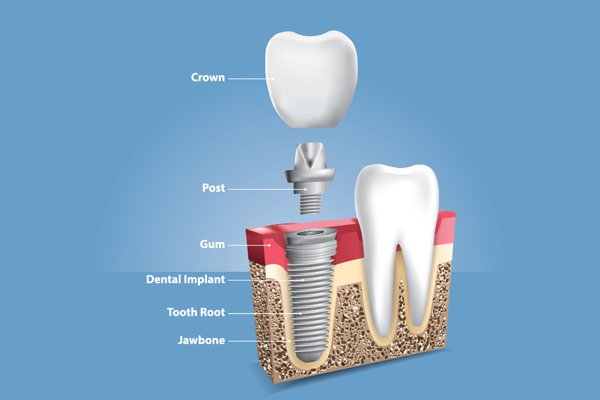
A dental implant is made up of three main parts that work together to replace a natural tooth. The first part is the implant screw, which is usually made of high-quality medical-grade titanium. This screw is surgically placed into the jawbone and acts as an artificial tooth root. Titanium is biocompatible, meaning it is safely accepted by the human body and does not cause allergic reactions. The second part is the abutment, which connects the implant screw to the crown. The third and most visible part is the crown, which is the artificial tooth placed on top of the implant. The crown is carefully designed to match the shape, size, and color of natural teeth, allowing it to blend seamlessly with the rest of the smile.
One of the greatest advantages of dental implants is that they function like natural tooth roots. After the implant is placed in the jawbone, a biological process called osseointegration takes place. During this process, the surrounding bone gradually fuses with the implant surface, creating a strong and stable foundation. Once osseointegration is complete, the implant becomes firmly anchored in the bone and can withstand normal biting and chewing forces. This stability makes dental implants far more comfortable and secure than removable dentures, which can slip or move during eating or speaking.
When missing teeth are not replaced on time, the jawbone can begin to shrink due to lack of stimulation. Natural tooth roots help maintain bone density by transmitting chewing forces to the jawbone. Without this stimulation, bone loss gradually occurs, which can lead to changes in facial appearance, such as a sunken or aged look. Dental implants help prevent this bone loss by providing the necessary stimulation to the jawbone. As a result, implants help preserve facial structure and maintain a natural, youthful appearance. This important benefit is not offered by traditional bridges or removable dentures.
Dental implants are suitable for many patients, provided they have good overall oral health and sufficient jawbone density. However, even patients with bone loss may still be candidates for implants thanks to modern dental techniques. Procedures such as bone grafting and sinus lifts can rebuild or strengthen the jawbone, making implant placement possible. These advancements have significantly expanded the number of patients who can benefit from dental implants.
The dental implant treatment process is usually carried out in stages to ensure safety, precision, and long-term success. It begins with a thorough consultation and examination, which may include X-rays or advanced imaging such as CBCT scans. These diagnostic tools help the dentist evaluate bone quality, nerve position, and overall oral condition. Once planning is complete, the implant placement surgery is performed. This procedure is typically done under local anesthesia and is generally painless. After the implant is placed, a healing period follows, allowing the implant to fuse with the bone. Once healing is complete, the abutment and crown are attached. In some selected cases, immediate implants or same-day crowns may be possible, depending on the patient’s condition.
From a comfort and durability perspective, dental implants offer unmatched benefits. Unlike dentures, implants do not need to be removed for cleaning or maintenance. Patients can care for implants just like natural teeth through regular brushing, flossing, and routine dental check-ups. With proper oral hygiene and care, dental implants can last for many years. In many cases, implants remain functional for 15 to 25 years or even a lifetime, making them a long-term and reliable solution.
Aesthetics is another major advantage of dental implants. The implant-supported crown is custom-made to look natural and realistic. Since it is fixed in place and designed to match surrounding teeth, it restores the smile in a way that feels and looks completely natural. This helps patients regain confidence and smile freely without feeling self-conscious about their teeth.
Dental implants also contribute significantly to improved speech. Missing teeth or ill-fitting dentures can interfere with proper pronunciation and clarity. Implant-supported teeth remain firmly in place, allowing patients to speak clearly and confidently. In addition, implants restore full chewing ability, enabling patients to eat a wide variety of foods without discomfort or fear of dentures shifting.
Although the initial cost of dental implants may seem higher compared to other tooth replacement options, they are a valuable long-term investment in oral health. Their durability, comfort, and natural function often make them more cost-effective over time than dentures or bridges that may require frequent repairs or replacements. When considering long-term benefits, dental implants provide excellent value.
In conclusion, dental implants do far more than replace missing teeth. They improve quality of life by restoring oral function, preserving facial structure, enhancing appearance, and boosting self-confidence. With their strength, stability, and natural feel, dental implants represent a permanent, reliable, and highly effective solution. For these reasons, dental implants are widely recognized as the gold standard in modern dentistry for tooth replacement.
Expert Care
Experienced professionals dedicated to your dental health
Quick Service
Efficient treatments that respect your valuable time
Ready to Get Started?
Schedule your appointment today and experience exceptional dental care
Book An AppointmentFrequently Asked Questions
Common questions about our dental treatments and services
Are dental implants painful?
Dental implant treatment is usually not painful. The procedure is performed under local anesthesia, so patients feel little to no discomfort during implant placement. After the procedure, mild pain or swelling may occur for a few days, which can be easily managed with prescribed medication. Most patients find dental implant treatment more comfortable than expected.
How long do dental implants last?
With proper oral hygiene and regular dental check-ups, dental implants can last 15 to 25 years or even a lifetime. Their longevity depends on factors such as bone health, overall oral care, and lifestyle habits like smoking. Proper brushing, flossing, and routine dental visits help ensure long-term success.
Who is a suitable candidate for dental implants?
Most adults with good general health and healthy gums are suitable candidates for dental implants. Adequate jawbone density is important, but even patients with bone loss may qualify with procedures like bone grafting. A dental examination and imaging tests are required to determine individual suitability.